From email to tasks
Role
Lead Product Designer
Timeline
2026
Scope
End-to-end
What I was trying to solve
The existing experience was fragmented for customers and inefficient for the business: underwriting requests lived outside the account portal in email and SMS, customers were asked to share sensitive information over insecure channels.
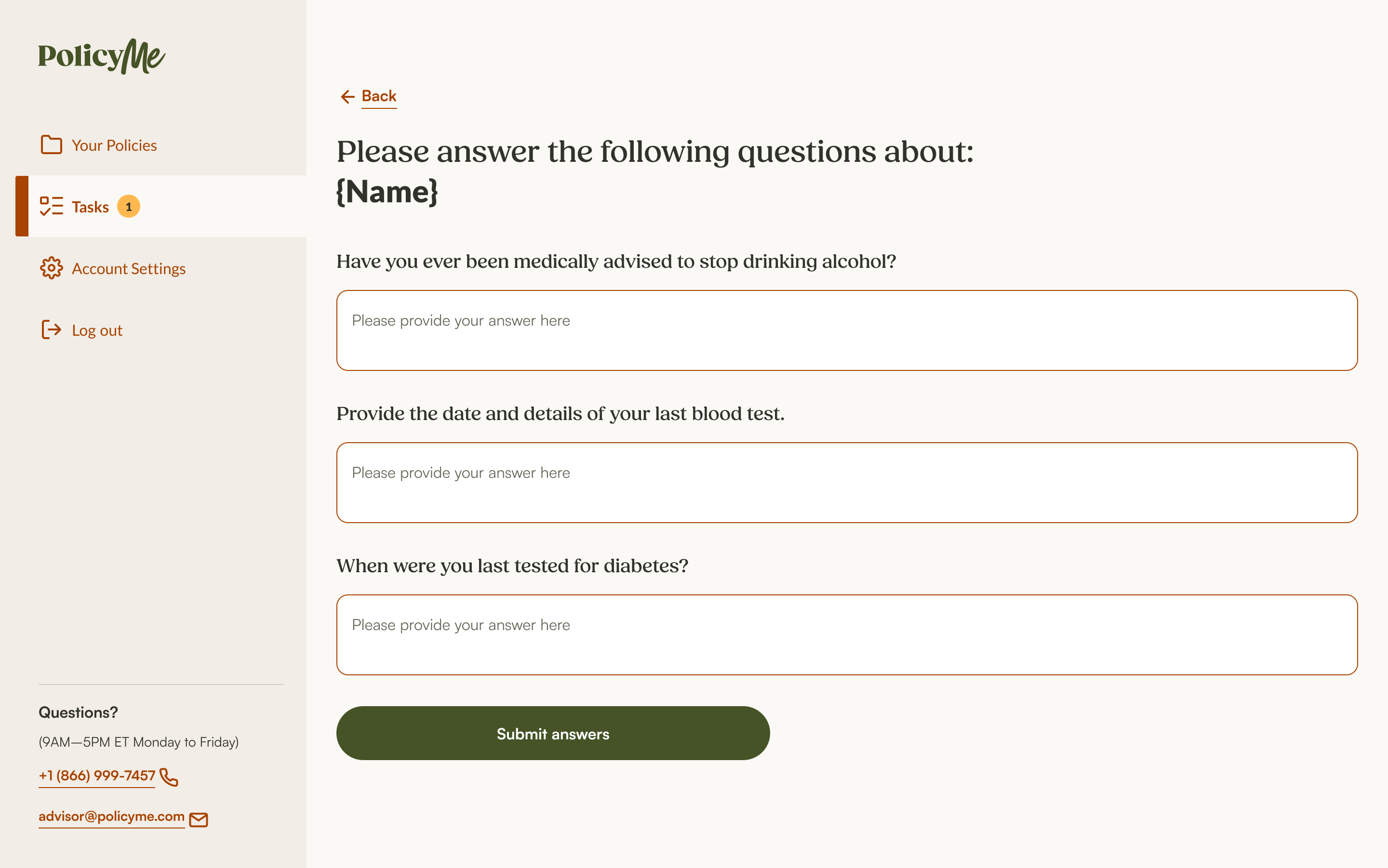
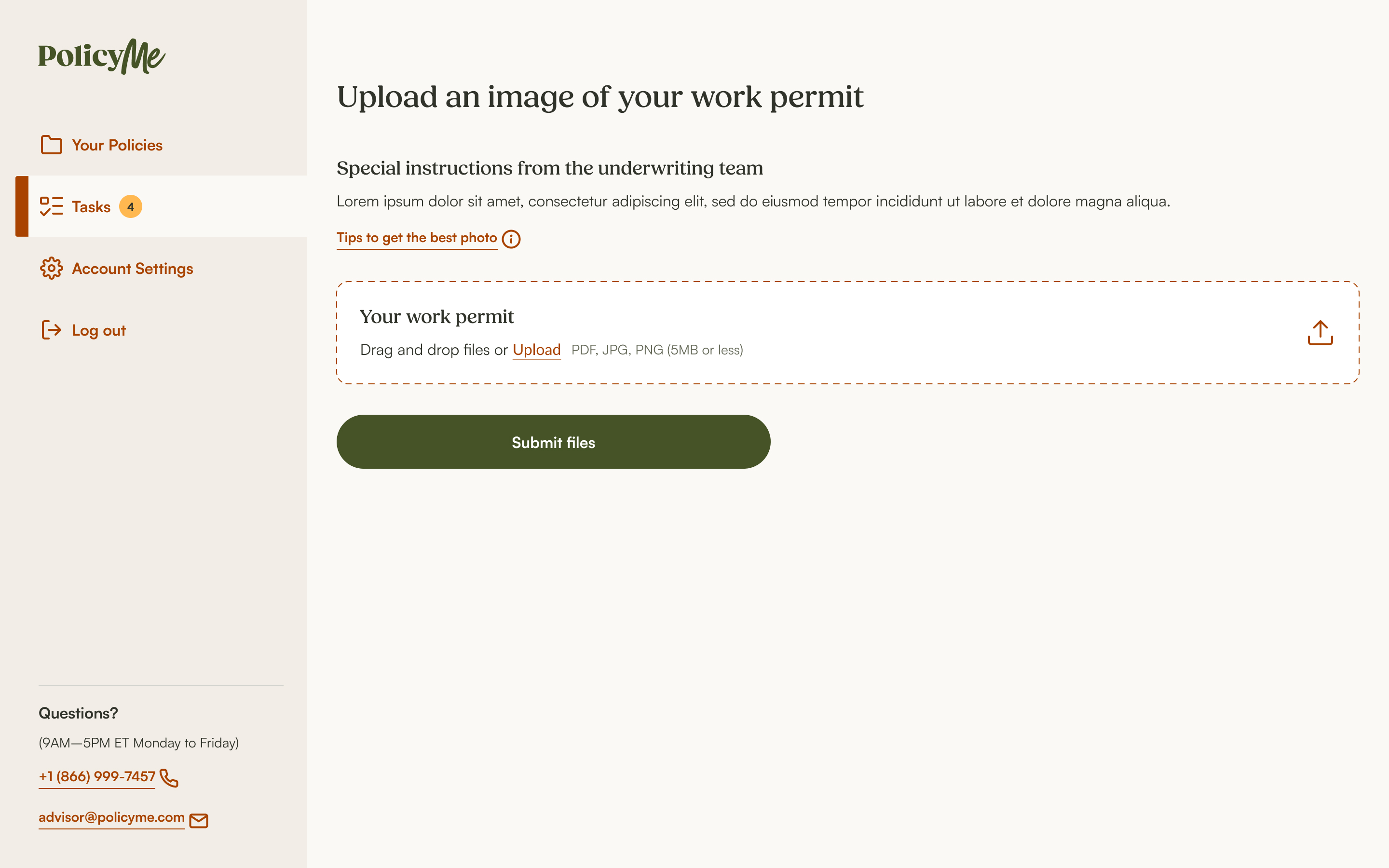
We needed to design a self serve experience that could scale beyond one use, starting with underwriting questions and expanding into document uploads.
Designing the full cycle
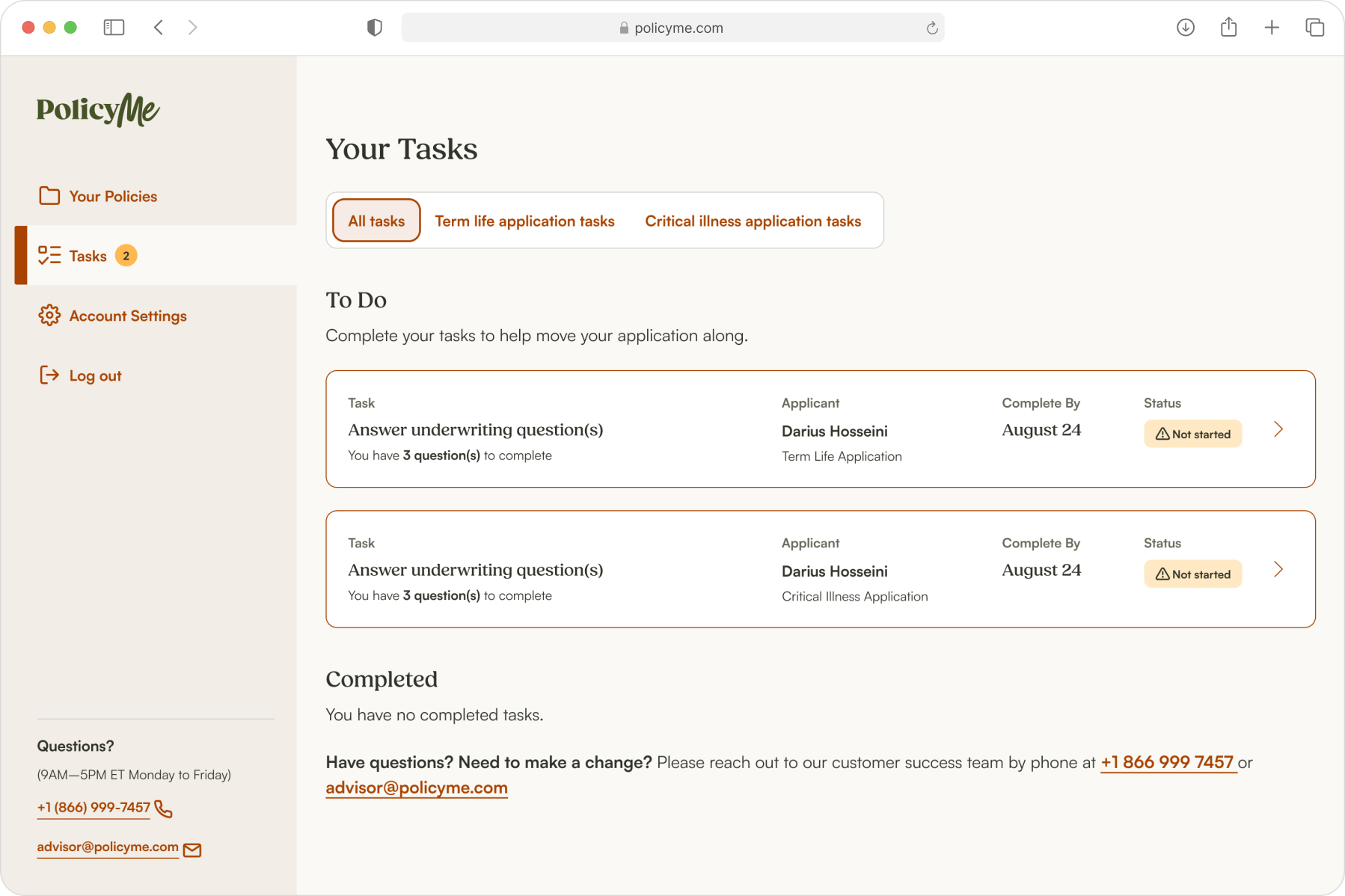
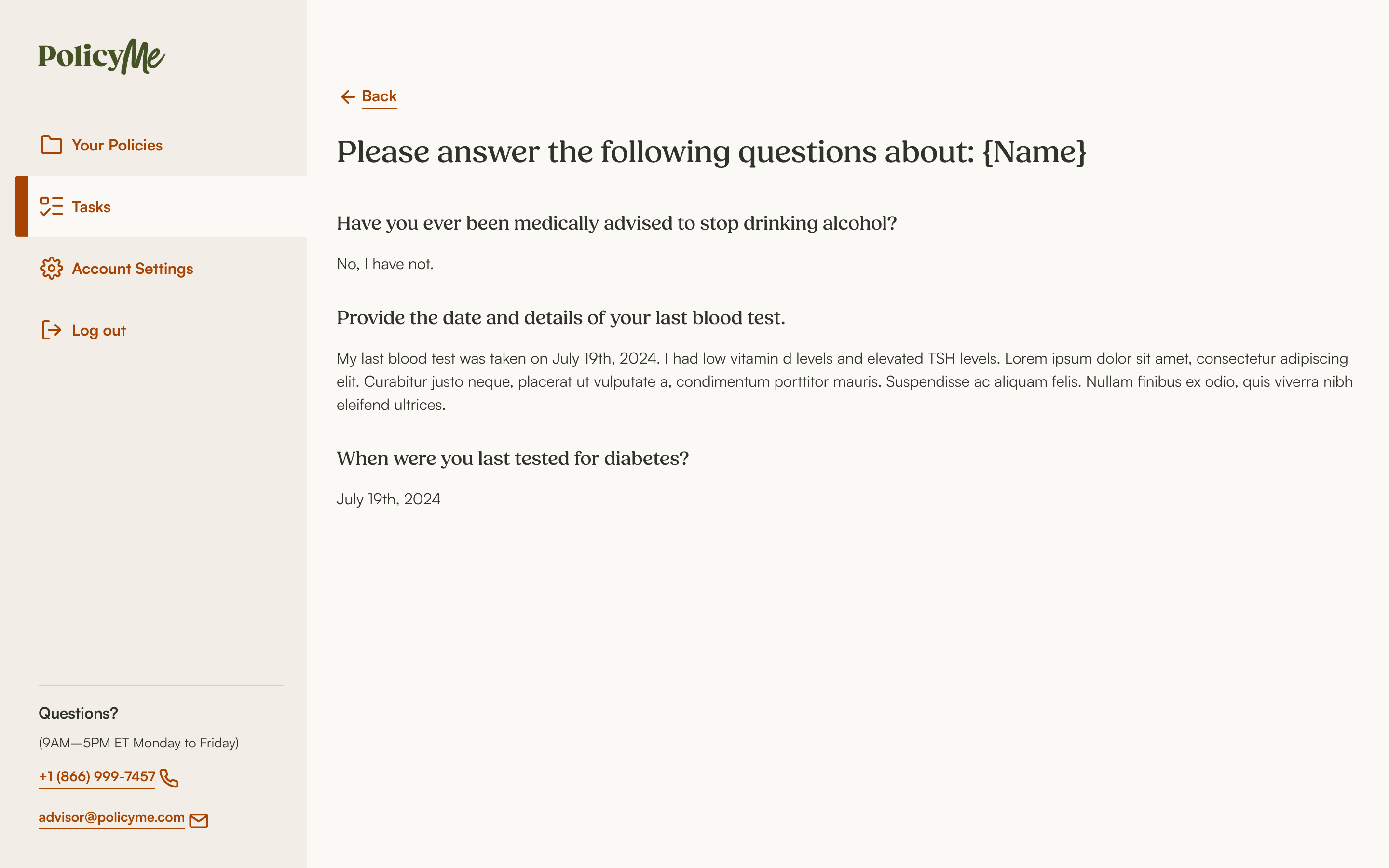
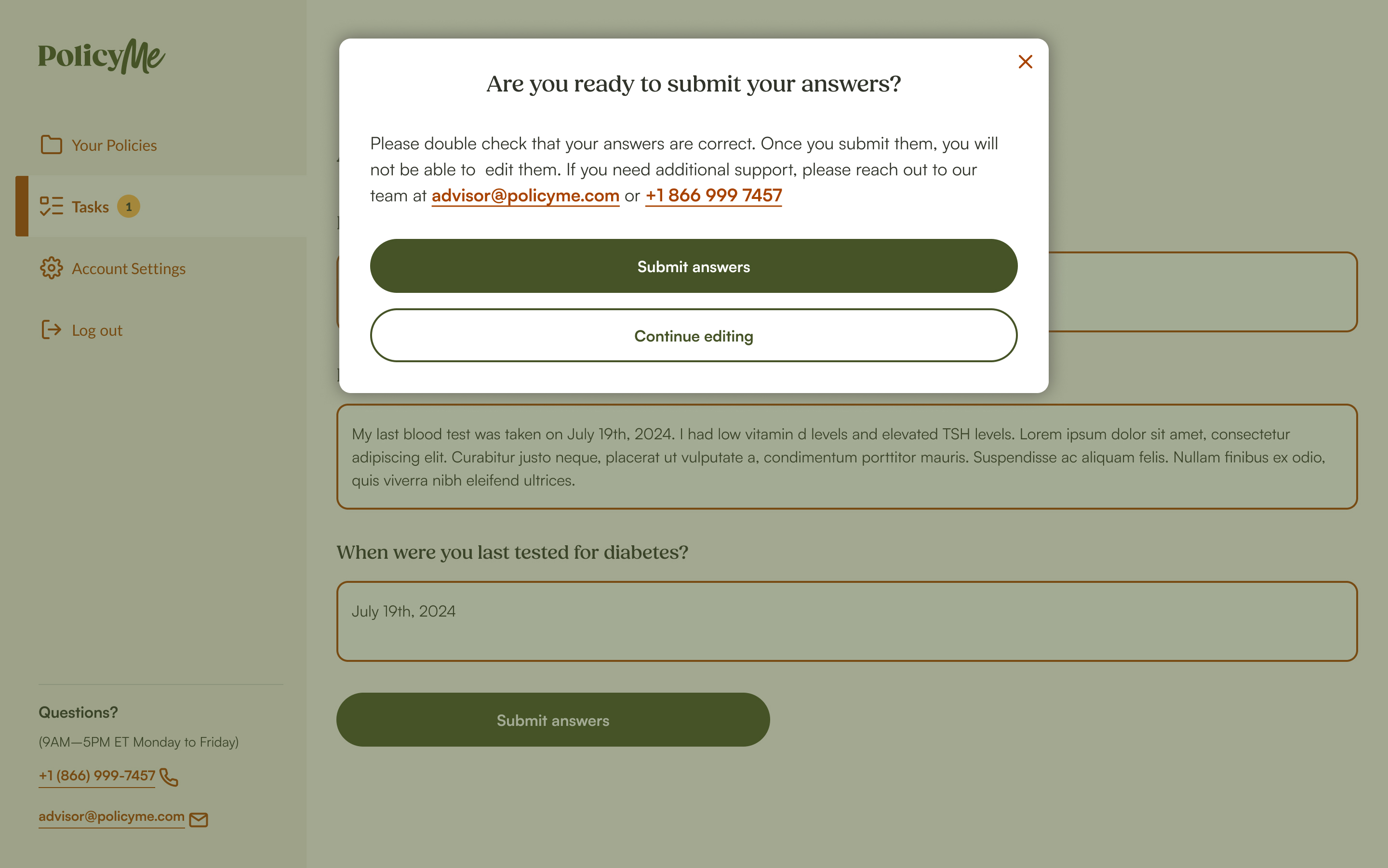
I owned the design for the accounts Tasks section and carried out a full end-to-end flow for how tasks are presented to customers and how they'll complete them.
Design approach
01
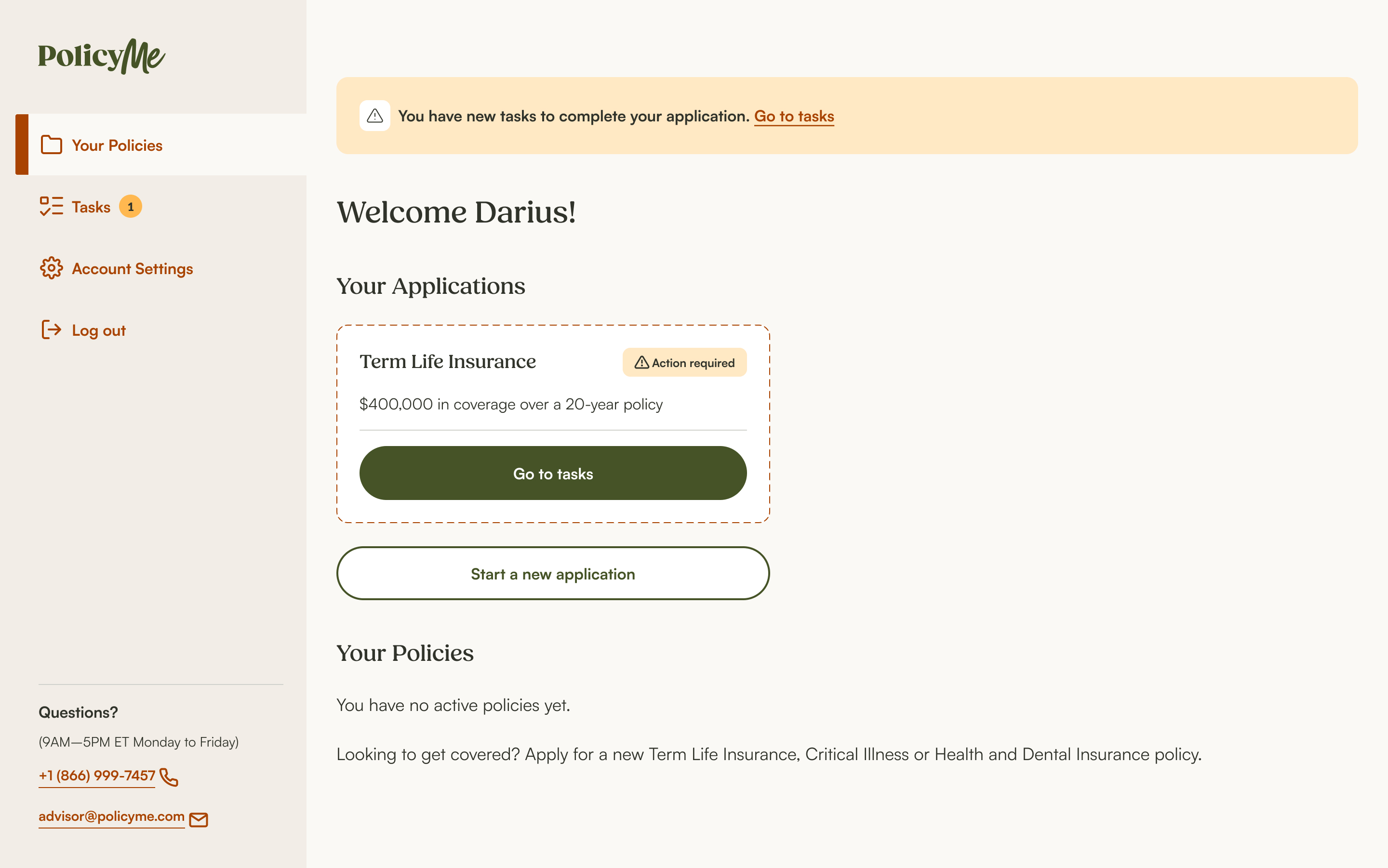
Make tasks discoverable from anywhere in the account
A customer shouldn't have to hunt around for underwriting requests that will help to move their application forward.
02
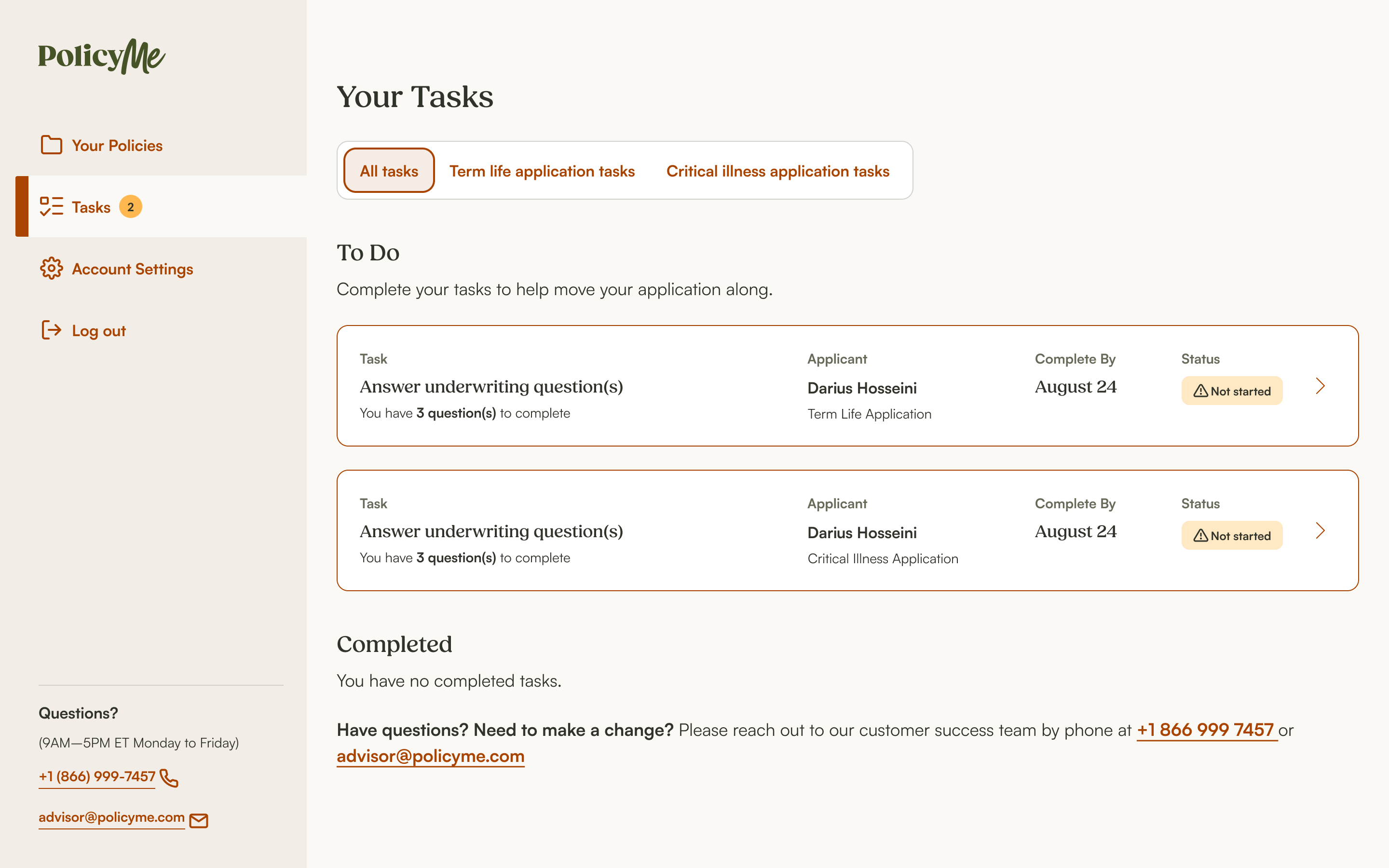
Organize the experience around task status
I leaned on a simple mental model: what still needs action and what is done.
03
Design for customers with multiple applications
A customer could have tasks tied to more than one application, so the experience couldn't assume a one-policy world.
04
Create a framework that could scale beyond one task type
Although the early MVP centered on question tasks, the broader initiative was always meant to expand to more than one type of task.
Key desktop screens
Post launch impact
Customers were successfully completing actions in the account portal and tenants saw higher conversion rates
The CRM sync times improved from 5+ hours to 20 minutes
What I learned
This project reinforced that good product design often means designing the system around the screen around the system. It reminded me how important edge cases and states are to the overall experience. Most importantly, I learned that moving a workflow into a self-serve surface is not just a usability improvement. When well done, it can improve security and reduce manual work for internal teams.